
Quartz Identification Using Raman Spectroscopy
Quartz Identification Using Raman Spectroscopy
April 8, 2025
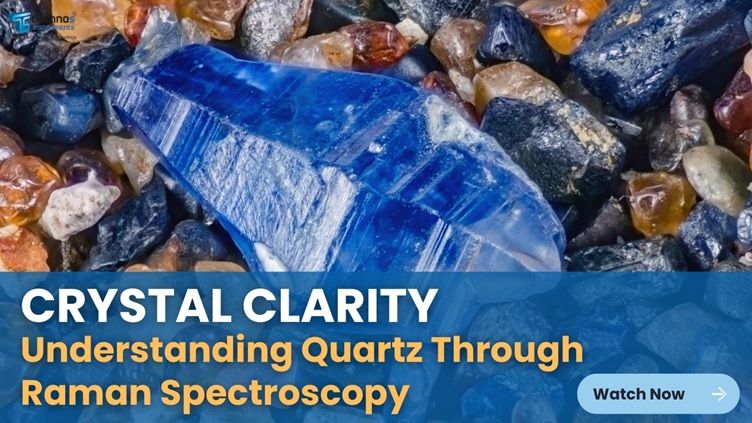
What is Quartz?
Quartz, one of the most abundant and versatile minerals on Earth, has captivated scientists, geologists, and collectors alike for centuries. Known for its impressive hardness (7 on the Mohs scale) and remarkable optical properties, quartz is not only admired for its aesthetic appeal but also valued for its scientific and industrial applications.
Quartz holds a special place in astrology and crystal healing due to its unique energetic and vibrational properties. Believed to amplify energy, quartz is often called the “Master Healer”, enhancing the effects of other stones and aligning with all zodiac signs. Its ability to store, transmit, and regulate energy makes it ideal for astrological rituals, chakra balancing, and spiritual cleansing. Different quartz varieties like Amethyst, Citrine, and Rose Quartz are linked to specific birth months and astrological elements, enhancing personal traits or providing protection. Its clarity and purity symbolize harmony between cosmic energies, personal growth, and universal connection. Here we will explore the diverse world of quartz—from its family and types to its spectral fingerprints captured through Raman Spectroscopy.
Using portable Raman spectrometers like the Portable Raman Spectrometer System,
gemologists can identify quartz instantly in the field.
Quartz forms
Quartz belongs to the silicate mineral family with the chemical formula SiO?. It occurs in two main forms: macrocrystalline and cryptocrystalline.
Macrocrystalline Quartz: Features large, visible crystals, more transparent. Examples include:
- Amethyst: Known for its purple hues.
Citrine: Displays yellow to red-orange colors.
Rose Quartz: Exhibits a delicate pink color.
- Smoky Quartz: Ranges from smoky brown to grey.
Rock Crystal: Is a clear, colorless variety.
Cryptocrystalline Quartz (Chalcedony): Composed of tiny microcrystals, translucent or mostly opaque. Varieties include:
- Aventurine: Mostly green, also found as orange, brown, yellow, blue, or grey
Agate: Shows colorful bands and patterns.
- Jasper: Commonly red, but may be yellow, brown, green or (rarely) blue.
- Carnelian: Orange to brownish red.
- Chrysocolla: Blue-green copper-rich mineral.
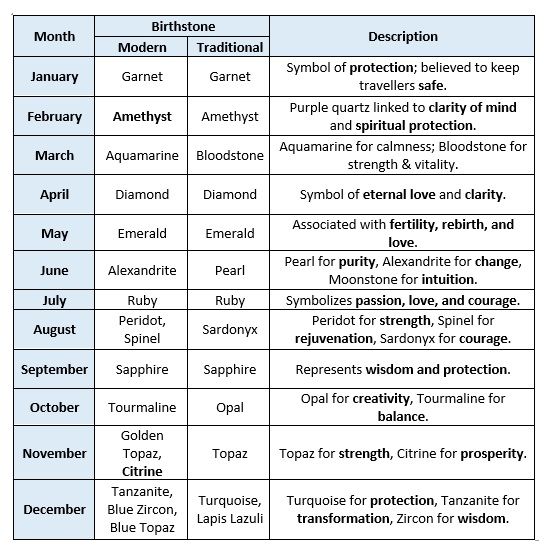
Birthstone (Modern and Traditional) Vs Month:
Quartz is associated with different birthstones, adding a personal touch to jewelry.
Gemological Uses and Appeal
Quartz as an Imitation Gem -
Quartz’s durability and range of colours make it a mainstay in jewellery. From simple clear quartz pendants to intricately cut amethyst rings and Citrine bracelets, quartz appeals to both casual buyers and collectors. Affordable pricing means even larger quartz stones, especially in coloured varieties, remain accessible to a broad audience. Varieties like smoky quartz, rose quartz, and amethyst have timeless appeal, balancing aesthetic beauty with metaphysical charm.
Jewellery –
Timeless Elegance & Affordability, Durable, colorful, and affordable, quartz suits both casual wearers and collectors. From clear quartz pendants to amethyst rings and Citrine bracelets, varieties like smoky, rose, and amethyst offer timeless beauty with metaphysical charm.
Watch Movements -
Precision Timekeeping Quartz’s piezoelectric effect allows it to oscillate at precise frequencies, making it indispensable in quartz watches. This scientific property transformed timekeeping, blending beauty with technology.
Carvings, Sculptures & Ornaments -
Quartz varieties like agate, jasper, and aventurine are prized for carvings and ornaments due to their patterns and translucence. Used in cameos, figurines, and seals, quartz carvings have been treasured since ancient Chinese, Egyptian, and Roman times.
Healing & Metaphysical Uses -
Quartz is arguably the cornerstone of crystal healing and metaphysical work. Clear quartz, known as the Master Healer, is believed to amplify energy and intention, making it central to meditation, chakra balancing, and spiritual cleansing. Amethyst, linked to spiritual protection and clarity, and rose quartz, symbolizing love and emotional healing, are staples in holistic healing practices. This dual identity - both a scientifically understood mineral and a spiritual conduit - adds to its widespread appeal in gemology.
Understanding Quartz through Raman Spectroscopy
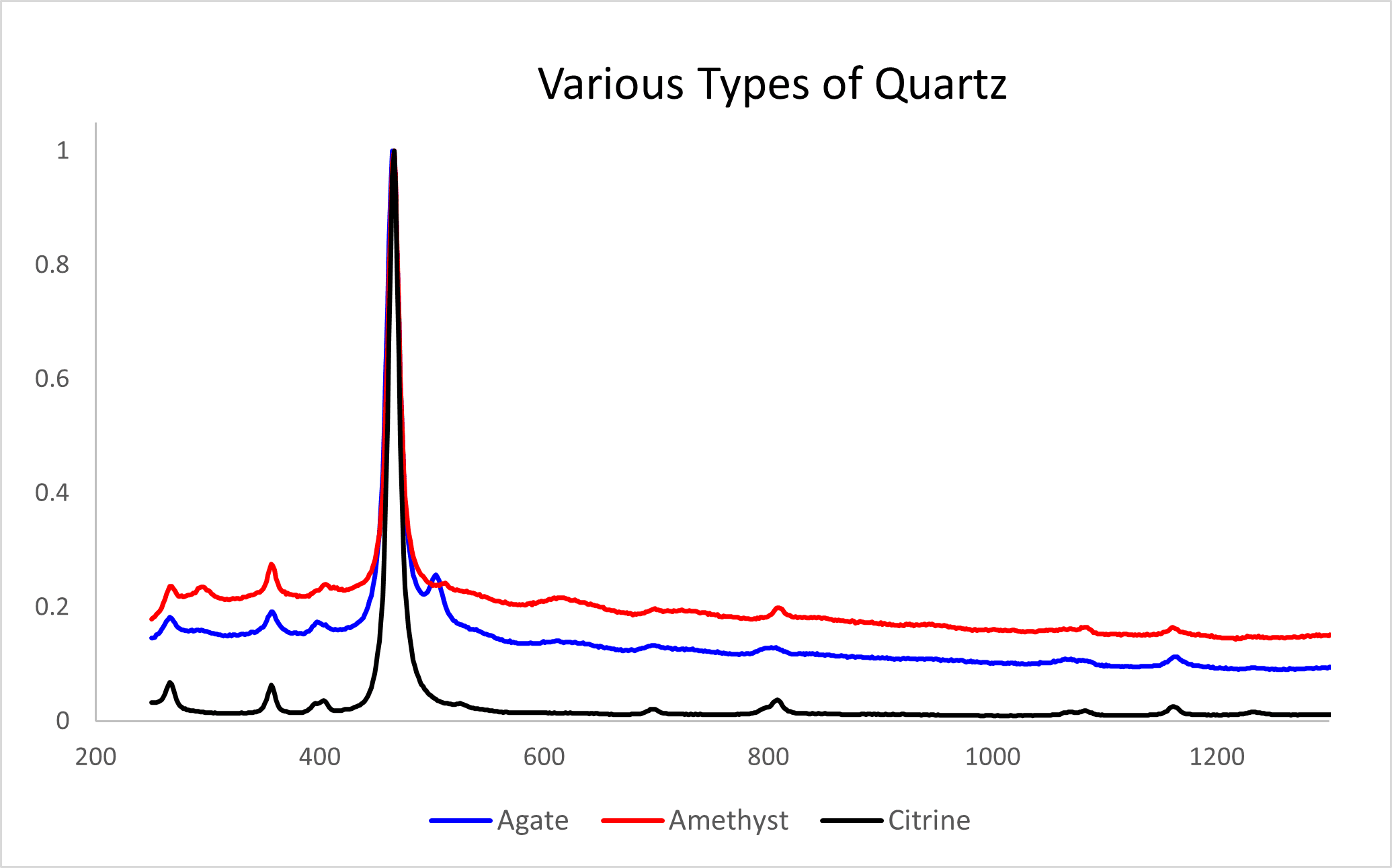
Raman Spectroscopy has become a crucial analytical tool for identifying minerals like quartz. By measuring vibrational modes within the quartz lattice, Raman spectra provide a unique spectral fingerprint. This non-destructive technique helps gemologists, archaeologists, and mineralogists:
- Differentiate natural vs synthetic quartz.
- Identify inclusions or impurities.
- Analyse microstructural stress or treatments applied to quartz gems.
Conclusion
Quartz, despite being ubiquitous, remains a cornerstone mineral for both scientific and cultural exploration. Its spectrum of types, colors, and uses bridges geology, gemology, and technology. Incorporating advanced tools like Raman Spectroscopy, modern researchers unlock microscopic secrets that enhance identification accuracy, assess provenance, and even detect treatments. Whether adorning a crown, powering a watch, or revealing Earth’s history through spectral lines, quartz continues to blend beauty and science into a single, enduring crystal.
Related Articles
- Raman Spectroscopy for Illicit Drug Detection
- Gemstone Identification with Raman Spectroscopy
- IndiRAM Raman Spectrometer for identification of Excipients in Pharmaceutical Drugs
- Innovations in Raman Spectroscopy: TechnoS at the Forefront
- Microplastic Contamination Detection in Food Grains: A Raman Spectroscopy Approach
- Field Testing Simplified: Benefits of Portable Raman Spectrometers
- Real-Time Explosive Trace Detection with IndiRAM Raman Spectrometer
- Reinventing Chemical Analysis: How Raman Spectroscopy is Shaping the Future of the Chemical Industry
- Revolutionizing Cancer Detection: How Raman Spectroscopy is Changing Early Diagnosis