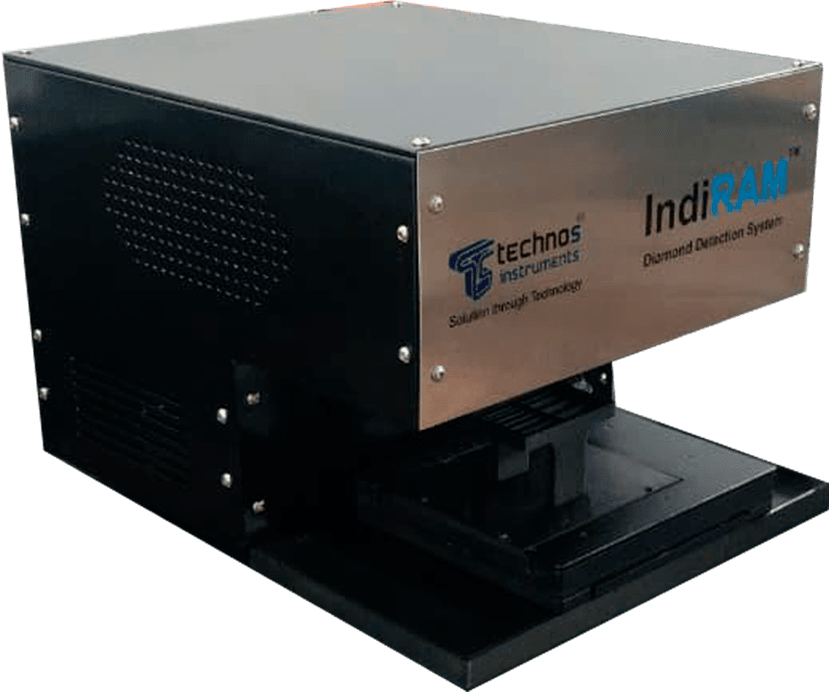
IndiRAM™ CTR with Quantum Characterizer
About The product
Fluorescence lifetime imaging microscopy (FLIM) measures a sample's fluorescence lifetime by analyzing the time-dependent decay of photon emission after excitation. Fluorescence lifetime is the time a fluorophore remains excited before returning to a lower-energy state. FLIM can be performed using either frequency-domain or time-domain techniques. In time-domain FLIM, a pulsed excitation laser directly measures the fluorescence decay over time. Time-correlated single-photon counting (TCSPC) measures the arrival time of individual photons relative to the excitation laser pulse. You can then analyze a histogram of photon arrival times using an appropriate exponential decay model to determine the fluorescence lifetime. The IndiRAM™ CTR system with Quantum Emitter Microscope is a multipurpose platform designed for quantum emitter characterization, Raman spectroscopy, photoluminescence (PL), and optical emission spectroscopy (OES).
Product Features
Compact, modular, and flexible system
Time-correlated single-photon counting (TCSPC)
High sensitivity and high-throughput spectral measurements
Multipurpose Raman, PL, OES, and quantum-emitter characterization platform
Confocal 3D fluorescence lifetime imaging microscopy
Time-resolved photoluminescence (TRPL) measurements
Customizable configuration for application-specific requirements
In-house technical and IT support
Areas of Application

Semiconductor

Solar Cells

Photoelectron measurements

Life Science/Medical Diagnostics
Request for Information
Do you have any questions or requests? Use this form to contact our team.
Related Products
Application Note
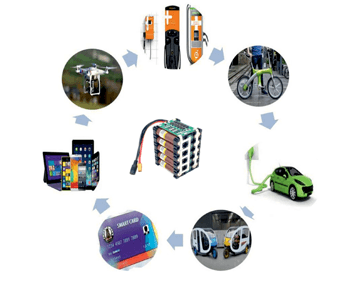
Battery Material Analysis
A fundamental understanding of battery materials and their characterisation is essential for advancing energy-storage technologies and improving battery performance.

Pesticide Detection
Pesticides are used in farming to yield high production by protecting the crop from pests and diseases.
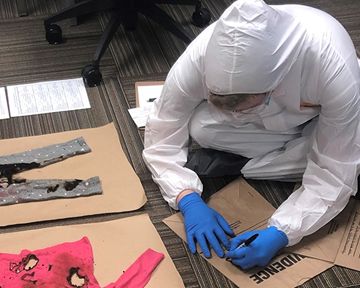
Tracer Forensic Analysis
Raman Spectroscopy has found applications in diverse fields of forensic science, such as toxicology, trace analysis, drug detection, and document authentication.
Exploring the Power of Quantum Characterization Systems
Embark on a journey beyond the limits of classical understanding and into the mesmerising realm of quantum mechanics. Welcome to an exploration of the unparalleled power and precision of Quantum Characterization Systems (QCS). In this realm, the seemingly paradoxical nature of quantum phenomena unfolds, and through the lens of QCS, we gain unprecedented insights into the fabric of reality itself.
Join us Raman with Quantum Measurement we peel back the layers of uncertainty, unveiling the transformative potential of these remarkable systems in unravelling the mysteries of the quantum world
How Quantum Measurements Enhance Raman Spectroscopy
Raman spectroscopy, a powerful analytical technique, provides valuable insights into the molecular structure, composition, and dynamics of materials. However, Quantum Characterization systemby integrating quantum measurements, Raman spectroscopy transcends its conventional capabilities, offering enhanced sensitivity, resolution, and versatility. In this article, we delve into the mechanisms and applications of quantum measurements in elevating Raman spectroscopy to new heights of precision and efficacy.
Quantum Measurements Redefine Raman Spectroscopy's Potential
Raman spectroscopy has long been a cornerstone technique in the realm of molecular analysis, providing invaluable insights into molecular structure, composition, and interactions. However, with the integration of quantum measurements, Raman spectroscopy is experiencing a transformative evolution, pushing the boundaries of its potential beyond conventional limits. In this article, we explore how quantum measurements are reshaping Raman spectroscopy, unlocking new capabilities and applications that were once thought to be out of reach.
Raman with Quantum Measurements are redefining Raman spectroscopy's potential, ushering in a new era of precision, sensitivity, and versatility in molecular analysis. By leveraging the principles of quantum mechanics, researchers can push the boundaries of what is achievable with Raman spectroscopy, opening up exciting opportunities for advancements in fields ranging from fundamental research to applied technology. As quantum-enhanced Raman spectroscopy continues to evolve, it promises to revolutionize our understanding of molecular systems and catalyze breakthroughs in science and technology.