Raman Spectroscopy vs FTIR: Which Analytical technique You Use?
Raman vs FTIR
June 18, 2026
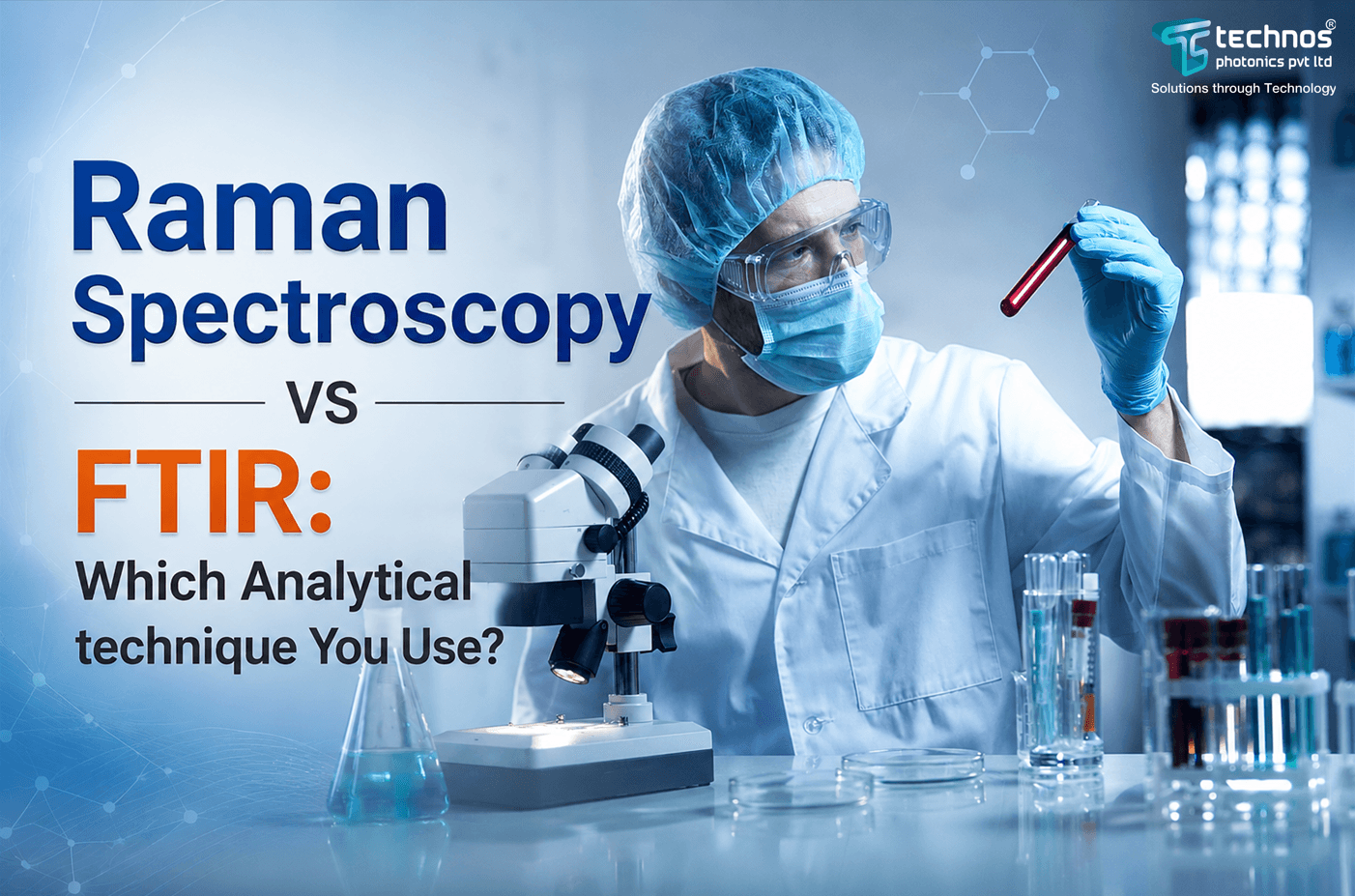
When you're choosing between a Raman spectrometer and an FTIR analyzer, the decision isn't simply about which instrument is "better." Both are powerful molecular identification tools but they interact with matter in fundamentally different ways, and that distinction often determines which one belongs in your lab.
Understanding those differences isn't just academic. It directly affects sample prep time, data quality, and whether your results hold up under scrutiny.
How each technique works
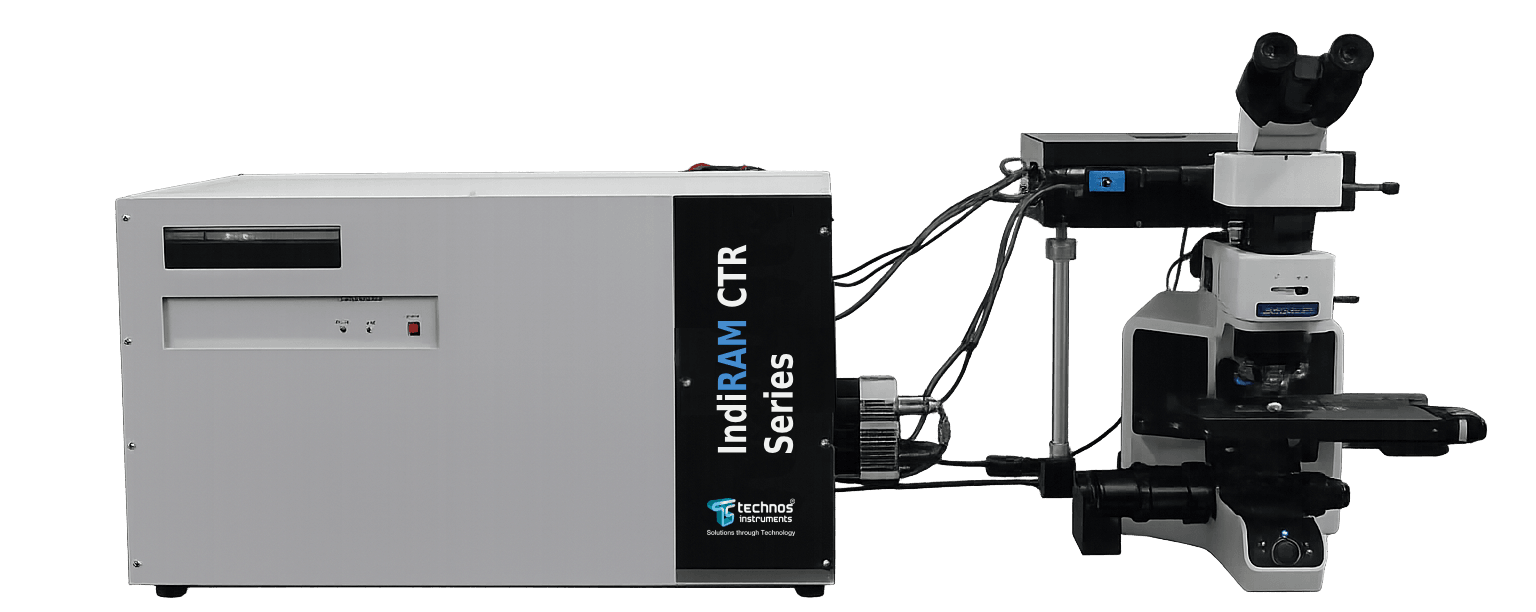
Raman spectroscopy measures the inelastic scattering of laser light. When a photon strikes a molecule, a tiny fraction of that light scatters at a shifted frequency the "Raman shift" which reveals the vibrational fingerprint of that molecule. No sample preparation is usually required. You point the laser, collect the scatter.
FTIR (Fourier Transform Infrared Spectroscopy) works differently. It measures how much infrared radiation a sample absorbs at different wavelengths. The resulting absorption spectrum is compared against reference libraries to identify chemical bonds and molecular structures. Most samples need some degree of preparation, depending on the technique used (ATR, transmission, diffuse reflectance, etc.).
Both methods interrogate molecular vibrations. The difference is in which vibrations each technique detects most effectively and that comes down to a concept called selection rules.
Selection Rules Matter More Than Most People Realize
- In IR spectroscopy, a vibration is active when it causes a change in dipole moment. That favors polar bonds, think O–H, C=O, N–H.
- In Raman, a vibration is active when it causes a change in polarizability. That favors symmetric, nonpolar bonds C=C, S–S, aromatic rings.
This is why the two techniques are often called complementary rather than competing. Water, for example, absorbs IR radiation intensely, making aqueous sample analysis difficult with FTIR. Raman, however, barely registers water making it the preferred choice for biological fluids, hydrated polymers, or in-situ reaction monitoring in aqueous environments.
Conversely, carbonyl-containing compounds (ketones, esters, acids) produce intense, highly diagnostic IR absorptions. If your work centers around functional group identification in organic molecules, pharmaceuticals, polymers, coatings, FTIR often gives you sharper, more actionable data.
Specification Overview: Raman vs FTIR at a Glance
Before diving into use-case scenarios, it helps to see the core technical differences side by side. These aren't marketing specs, they're the parameters that actually influence whether a technique will work for your application.
| Parameter | Raman Spectroscopy | IR Spectroscopy (FTIR) |
|---|---|---|
| Working Principle | Inelastic scattering of laser light | Absorption of infrared radiation |
| Sensitivity Basis | Change in polarizability | Change in dipole moment |
| Water Interference | ✓ Very low (ideal for aqueous systems) | ✗ High (water absorbs IR strongly) |
| Wavenumber Range | 10–4000 cm⁻¹ | 400–4000 cm⁻¹ |
| Sample Preparation | Minimal or none | Often requires sample preparation |
| Non-destructive Analysis | ✓ Yes | ✓ Yes |
| In-line / PAT Suitability | ✓ Excellent for Process Analytical Technology | Limited but used in ATR-FTIR setups |
| Analyze Through Packaging | ✓ Yes (glass vials, blister packs) | ✗ Generally not possible |
| Polymorph Identification | ✓ Very effective | ✓ Effective but less sensitive than Raman |
| API vs Excipient Discrimination | ✓ Good, even in mixtures | Overlapping peaks may occur |
| Quantitative Analysis | ✓ Strong (with chemometrics) | ✓ Strong (widely used in QC labs) |
| Solid-state Analysis | ✓ Excellent | ✓ Good |
| Speed of Analysis | Fast, real-time possible | Fast but often offline |
Fluorescence: A Common Challenge in Raman Spectroscopy
One factor that doesn't always appear in textbook comparisons but matters enormously in real lab conditions is fluorescence interference in Raman spectroscopy.
When a sample fluoresces under laser excitation, that emission can swamp the Raman signal entirely. Colored samples, biological matrices, and many industrial materials fall into this category. Switching to a near-infrared (NIR) laser (785 nm or 1064 nm) reduces this significantly, but not always completely. FTIR doesn't suffer from fluorescence issues. If you're working with samples that fluoresce under visible or UV light, FTIR's IR absorption mechanism is simply unaffected.
Resolution, Speed, & Throughput
Modern FTIR systems are fast; a full mid-IR spectrum can be acquired in seconds, and ATR-FTIR in particular requires almost no sample handling. For high-throughput quality control environments, this speed is valuable.
Raman acquisition times vary more widely. Confocal Raman systems used for mapping or imaging can take minutes to hours per sample, depending on spatial resolution and scan area. Handheld Raman devices, however, have become genuinely fast and field-deployable useful for incoming material verification in pharmaceutical or forensic settings.
A Practical Decision Framework
Before committing to either instrument, it helps to ask three questions:
- What is your sample matrix? Aqueous, organic, inorganic, biological? This single factor often determines the answer.
- What information do you actually need? Structural identification?
- Quantitation? Surface chemistry? Phase mapping?
What are your constraints? Budget, sample volume, throughput, field vs. lab use? If your answers point to water-rich samples, non-destructive testing, or symmetric bond systems lean toward Raman. If you need robust functional group ID, broad spectral libraries, or trace gas analysis FTIR is likely the stronger choice.
Neither Raman nor FTIR is universally superior. Experienced analytical chemists often maintain access to both precisely because their strengths don't overlap they fill each other's gaps. If you're building out a new analytical capability and can only choose one, the sample type and measurement goal should drive the decision, not the instrument's reputation.
When in doubt, run both on representative samples. The spectra themselves will often tell you which technique is giving you cleaner, more interpretable data.
Related Articles
- Field Testing Simplified: Benefits of Portable Raman Spectrometers
- How Raman Spectroscopy is Advancing Battery Material Analysis
- IndiRAM Raman Spectrometer for identification of Excipients in Pharmaceutical Drugs
- Innovations in Raman Spectroscopy: TechnoS at the Forefront
- Gemstone Identification with Raman Spectroscopy
- Microplastic Contamination Detection in Food Grains: A Raman Spectroscopy Approach
- Raman Spectrometer Principle and Core Components
- Raman Spectroscopy for Critical Minerals and Rare Earth Elements (REEs)
- Raman Spectroscopy for Critical Minerals and Rare Earth Elements (REEs) - Cu
- Raman Spectroscopy for Critical Minerals and Rare Earth Elements (REEs) – Mica Minerals
- Raman Spectroscopy for Illicit Drug Detection
- Raman Spectroscopy for Pharmaceutical Quality Control